


IELTS Stress in Pakistan: What I Have Seen as an IELTS Trainer

For many students in Pakistan, IELTS is much more than an English language test. It is often connected to a bigger dream studying abroad, gaining admission to a university, finding better opportunities, or moving to another country.
As an IELTS trainer, I have worked with many students who were academically capable and had a good command of English but still felt extremely nervous about the test. In my experience, one of the biggest challenges students face is not always their English ability. Often, it is the fear and pressure surrounding the test.
I have seen students worrying about their band scores weeks before the actual examination. Some are afraid of the Speaking test, some are worried about Writing, while others fear that one difficult question will ruin their entire performance.
Sometimes, however, what a student needs most is not more pressure or endless practice it is the right guidance, preparation, and confidence.
A Student Experience That I Still Remember

One experience that particularly stands out to me involved a student who was extremely worried about taking IELTS.
The student had a reasonable level of English but lacked confidence. Before the test, there were many questions and doubts:
“What if I don’t get the required band?”
“What if I forget what I have prepared?”
“What if the examiner asks me something I don’t know?”
The student was particularly worried about the Speaking test and felt that nervousness would negatively affect their performance.
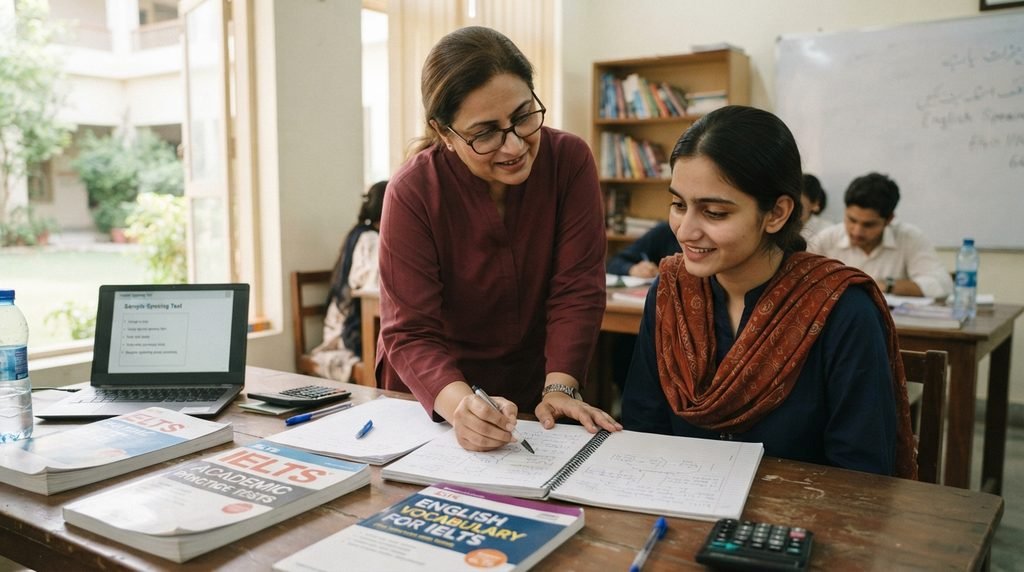
Instead of focusing only on increasing vocabulary or completing more practice tests, we worked on the student’s overall approach to IELTS. We practised speaking naturally, addressed common weaknesses, discussed how to organise ideas effectively in Writing, and, most importantly, worked on building confidence.
I kept reminding the student that IELTS is not about giving a perfect answer to every question. It is about demonstrating your English language ability clearly and effectively.
After consistent practice, preparation, and guidance, the student finally took the test.
The result was Band 8.0.
For me, the achievement was not simply about the number 8. It was a powerful example of how confidence, combined with proper preparation, can influence a student’s performance.
A student who had once worried about whether they could achieve the required score eventually achieved an impressive Band 8.0.
Why Do Students Become So Nervous About IELTS?
There are several reasons why IELTS can create so much anxiety among students.
The Pressure of the Required Band Score
Students often have a specific target, such as 6.5, 7.0, or 7.5. When university admission, scholarships, immigration plans, or future opportunities depend on that score, IELTS can feel like a very high-pressure experience.
This pressure can lead students to overthink every mistake.
However, one mistake does not determine your final band score. Students need to understand that their overall performance matters more than a single imperfect answer.
Fear of the Speaking Examiner

The Speaking test is probably one of the areas where I see the most nervousness.
Students sometimes believe that the examiner expects perfect English. They worry about their accent, grammar, vocabulary, or whether they will understand every question immediately.
I always tell my students to focus on communication rather than trying to sound perfect.
The goal is to express your ideas clearly, naturally, and confidently. You do not need to imitate a particular accent or use unnecessarily complicated vocabulary to demonstrate your English ability.
Comparing Yourself With Others
Students often compare their preparation with that of friends, classmates, or people they see online.
Someone may say they achieved a high band score after preparing for only one month, while another person may have prepared for six months.
This comparison is rarely helpful.
Every student starts at a different level and has different strengths, weaknesses, learning styles, and circumstances. Your IELTS journey should be based on your own progress, not someone else’s timeline.
Confidence Comes From Preparation

Confidence does not mean believing that you will never make a mistake.
Real confidence comes from knowing what you are doing and being prepared for the challenges you may face.
As a trainer, I encourage students to understand the test format, practise regularly, identify their weaker areas, and learn from their mistakes.
Mock tests are useful, but they should not become a constant source of stress. The purpose of a mock test is to show you where you need improvement not to make you feel that you are failing.
Use your mistakes as information. They can show you what you need to work on before the actual test.
Don’t Memorise Everything
One common mistake I see among IELTS candidates is trying to memorise complete answers, especially for the Speaking and Writing sections.
Students sometimes prepare complicated sentences and difficult vocabulary because they believe this will automatically result in a higher band score.
In reality, your English should sound natural.
Learn useful vocabulary and sentence structures, but also understand how and when to use them appropriately. Most importantly, learn how to develop and express your own ideas clearly.
Memorisation cannot replace genuine communication skills.
What I Tell My Students Before Their Test
Before the test, I usually remind my students of something very simple:
You have prepared for this. Now trust your preparation.
If you make a mistake, don’t panic.
If you don’t understand a question immediately, take a moment to think.
If one section feels difficult, don’t assume that the entire test has gone badly.
Stay focused on the question in front of you and give it your best response.
The student who achieved Band 8.0 is a good example of this. The fear was there before the test, but preparation and confidence helped turn that fear into a strong performance.
IELTS Is a Test, Not a Measure of Your Potential
I believe it is important for students to remember that an IELTS score does not define their intelligence, abilities, or future.
It is simply an assessment of English language proficiency at a particular point in time.
If you don’t achieve your target score on your first attempt, it does not mean that you are incapable of achieving it. It means you need to understand what went wrong, improve those areas, and try again when you are ready.
As an IELTS trainer, one of the most rewarding parts of my work is seeing students move from saying:
“I don’t think I can do it.”
to:
“I achieved my target.”
Sometimes, those same students end up surprising themselves with what they are capable of achieving.
Final Thoughts

IELTS preparation in Pakistan can be stressful. The expectations, financial investment, university deadlines, family pressure, and fear of failure can all make the experience more challenging.
However, students should not allow that pressure to control their preparation or undermine their confidence.
My experience as an IELTS trainer has taught me that preparation and confidence go hand in hand. A student may have good English but lack confidence, while another may have weaknesses but improve significantly with consistent practice and the right guidance.
So, if you are currently preparing for IELTS and feeling nervous, don’t let fear convince you that you are not capable.
Prepare well. Practise consistently. Learn from your mistakes. Stay calm. Trust your preparation—and trust yourself.
I have seen students who were once extremely worried about their IELTS test go on to achieve Band 8.0.
Your fear does not have to determine your result. With the right preparation, guidance, and mindset, you may be capable of achieving more than you think.

Leave a Reply